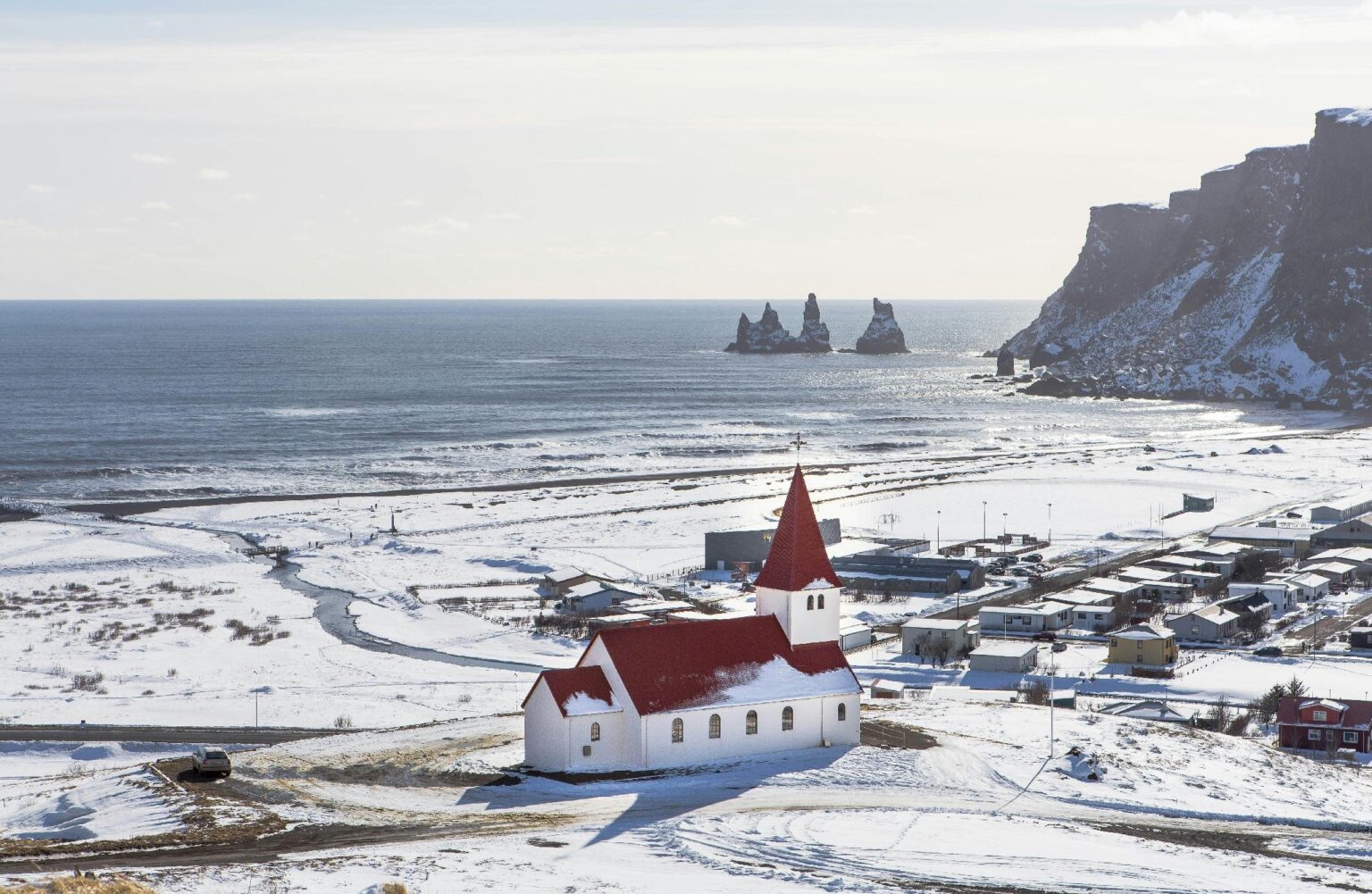
Iceland is spectacular at any time of year, but winter changes the country completely.
Mountains disappear beneath snow. Waterfalls become framed by ice. The days grow shorter and the evenings darker, creating long opportunities to search for the northern lights. Even familiar landscapes can feel wilder and more dramatic beneath a low winter sun.
It is certainly not the easiest season for travelling around Iceland.
Weather can be unpredictable, roads require more care and daylight needs to be used wisely. But for travellers willing to embrace those conditions, winter offers an atmosphere that is difficult to experience at any other time of year.
This is Iceland at its most elemental.
Make the Most of the Winter Light
One of the first things visitors notice about an Icelandic winter is the light.
Days are shorter, particularly around December and January, but that doesn’t necessarily mean they are less rewarding.
Instead, the sun remains relatively low in the sky, creating long periods of soft light that photographers often spend entire trips trying to capture elsewhere.
Sunrise gradually turns snow-covered mountains pink and gold. Later in the afternoon, the light begins to soften again, casting long shadows across lava fields and frozen landscapes.
You may have fewer daylight hours, but those hours can be beautiful.
The key is planning around them.
Rather than trying to fit as much as possible into a single day, winter travel works best when the itinerary is built around realistic distances, weather conditions and the best times to experience each location.
Search for the Northern Lights
For many travellers, seeing the aurora borealis is one of the biggest reasons to visit Iceland in winter.
There is something uniquely exciting about heading into the countryside after dark, away from Reykjavík’s lights, and waiting to see whether the sky will cooperate.
Sometimes the aurora arrives suddenly.
A faint streak of green becomes brighter before beginning to move across the sky. On particularly strong nights, the colours can stretch across huge sections of the horizon.
On other evenings, nothing happens at all.
That unpredictability is part of what makes the experience so memorable. There is no performance schedule and no guaranteed viewing time. Weather, cloud cover and solar activity all play a role.
Having flexibility in your itinerary can therefore make a real difference. If conditions look better on one evening than another, plans can be adjusted accordingly.
Step Inside a World of Ice
Winter also opens up experiences that simply aren’t available throughout the rest of the year.
Natural ice caves are perhaps the best example.
Formed within glaciers and reshaped as the ice moves and melts, these caves can reveal extraordinary shades of blue, white and black. Light filters through layers of compressed ice while volcanic ash tells the story of eruptions that took place years or even centuries ago.
No two seasons are exactly the same.
The caves can change significantly from one winter to another, meaning guides continually assess new formations and conditions.
That makes visiting with experienced local professionals essential.
For travellers looking for a winter tour in Iceland, the country offers far more than northern lights alone. Glacier experiences, frozen waterfalls, geothermal bathing and snow-covered landscapes can all become part of a carefully planned winter itinerary.
Warm Up the Icelandic Way
Of course, travelling through Iceland in winter isn’t entirely about embracing the cold.
Few things feel better after a day outdoors than sinking into naturally heated geothermal water.
Hot pools and geothermal baths are found throughout the country, ranging from well-known spas to smaller bathing spots surrounded by countryside.
The contrast is part of the appeal.
You might be standing outside in freezing temperatures one moment and sitting comfortably in steaming water the next, watching snow settle on the surrounding landscape.
Icelanders have been enjoying geothermal bathing for generations, and it remains an important part of everyday culture.
For visitors, it is also an excellent reminder that winter travel doesn’t need to mean being cold all day.
Build the Journey Around Comfort
Winter is also a season when the details of a journey become particularly important.
After several hours exploring in cold weather, where you stay matters. So does how you travel between locations and how much flexibility has been built into the itinerary.
For some travellers, an ultra-luxury Iceland trip isn’t just about extravagant surroundings at every moment. It also means having a knowledgeable private guide, travelling in a comfortable vehicle and staying in carefully chosen hotels where you can properly relax after a day outdoors.
It can also mean not having to worry about every logistical detail.
Winter conditions in Iceland can change quickly. Roads may become difficult, plans may need adjusting and the best place to search for the northern lights could be somewhere entirely different from where you expected to spend the evening.
Having local expertise available allows the itinerary to adapt without sacrificing the overall experience.
That kind of flexibility becomes especially valuable when daylight and weather dictate the rhythm of the trip.
Enjoy Iceland at a Different Pace
Winter naturally encourages slower travel.
There is less temptation to drive enormous distances simply because daylight stretches late into the evening. Instead, days tend to have a clearer rhythm.
Explore while the sun is up.
Take time over dinner.
Relax in a geothermal pool.
Then step outside again after dark and look towards the sky.
That slower pace can make the journey feel surprisingly restorative.
Rather than treating Iceland as a collection of attractions to tick off, winter encourages you to pay more attention to the atmosphere of a place.
The sound of snow beneath your feet. The silence of a frozen valley. Steam rising into cold evening air. The first appearance of stars after the clouds begin to clear.
Those quieter moments often become some of the most memorable parts of the trip.
Embrace the Unpredictability
There is no denying that Icelandic winter weather can disrupt plans.
A perfectly clear morning can become windy and snowy by the afternoon. Roads can close and excursions occasionally need to change.
Trying to fight that unpredictability is rarely productive.
A better approach is to accept it as part of travelling somewhere where nature still dictates the schedule.
With enough flexibility, a change of plans can lead somewhere unexpected.
Perhaps the weather rules out one area but reveals perfect conditions somewhere else. Maybe clouds prevent a northern lights hunt one evening, only for the sky to become completely clear the following night.
Travelling well in Iceland during winter is less about controlling every moment and more about being prepared to adapt.
See Iceland in a Completely Different Way
Winter doesn’t simply add snow to Iceland’s landscapes.
It changes the entire experience.
The light is different. The pace is different. The activities change and darkness becomes something to look forward to rather than something that ends the day’s sightseeing.
It may require warmer clothes, careful planning and a little more flexibility, but the rewards can be extraordinary.
Glaciers appear bluer against the snow. Geothermal pools become even more inviting. Waterfalls freeze around their edges and evenings bring the possibility that the sky above you might suddenly turn green.
For travellers looking for a version of Iceland that feels atmospheric, dramatic and genuinely different, winter is difficult to beat.